NdFeB
N42 Cube Magnet
Dimensional tolerances are confirmed against the approved drawing and depend on part size, geometry and finishing process. Please identify critical dimensions when requesting a quotation.
Specifications
| Grade | N42 |
|---|---|
| Shape | Cube |
| Coating | Ni-Cu-Ni, Zn, Epoxy, Au (custom on request) |
| Tolerance | Dimensional tolerances are confirmed against the approved drawing and depend on part size, geometry and finishing process. Please identify critical dimensions when requesting a quotation. |
| Magnetization | Axial / Diametric / Radial |
| Applications | Education and demonstration arrays, sensor targets and spacers, fixture and jig builds |
| Lead time | Production lead time and shipping transit time are quoted separately. The confirmed schedule depends on the approved drawing, quantity, documentation requirements, destination and shipping method. |
| MOQ | Quoted per inquiry |
| Export control | Export classification is confirmed per shipment against the product composition and destination. |
What is an N42 cube magnet
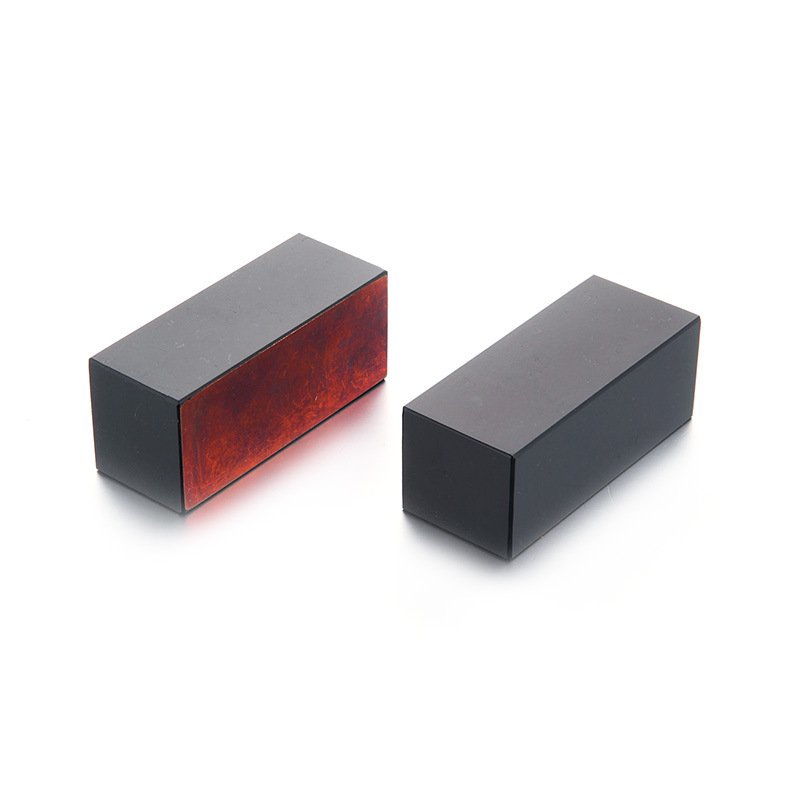
N42 cube magnets are sintered NdFeB blocks with equal edges, magnetized through a pair of faces. The cube is the convenience shape: orientation on the bench does not matter, arrays stack without shimming, and fixtures can be built from a single part repeated.
N42 magnetic performance
Available grades, temperature ratings and coatings are confirmed against your drawing and operating conditions at quotation.
Available grades, temperature ratings and coatings are confirmed against your drawing and operating conditions at quotation.
Why choose N42
N42 is the balanced grade: strong remanence at a moderate cost per kilogram, with the best process yield of the mid-range grades on thin sections and large diameters. It is the default choice when neither maximum flux nor minimum price dominates the brief.
Shape, dimensional tolerance and magnetization
Dimensional tolerances are confirmed against the approved drawing and depend on part size, geometry and finishing process. Please identify critical dimensions when requesting a quotation.
Surface treatment
Test conditions and reports are available on request.
Coating choice follows the environment: bright Ni-Cu-Ni for indoor and clean-room work, zinc for cost-sensitive volume, and epoxy where the part is handled, exposed to salt mist or must not glare. Bare NdFeB corrodes quickly, so every cube leaves the plant coated unless the brief explicitly calls for a phosphated or as-ground finish.
Typical applications
N42 cubes end up in demonstration arrays, sensor targets and spacers, and fixture and jig builds where a repeated part is easier to design around than a custom block.
Handling, storage and shipping
Sintered NdFeB is hard but brittle: it chips on impact and pinches fiercely when it snaps to steel. Parts ship in padded, magnetically shielded or spaced packing with keepers where the design calls for them, and air freight follows IATA packing instruction 902 with the field at the package surface measured before dispatch.
Custom sizing, prototyping and order minimums
Every dimension, grade suffix, coating and magnetization direction is built to your drawing or reproduced from your sample. Samples and small batches come first, then volume; repeat orders are faster because the tooling and the inspection routine already exist. Minimum order quantities are quoted per inquiry against the geometry and the grade.
Grade, temperature and coating — how this part is specified
A complete specification names the grade (including the temperature suffix), the shape and dimensions with tolerances, the magnetization direction, the coating and the destination. With those five points YUECI KEJI quotes quickly; with any of them missing the project waits. Working temperature is set by the suffix, not by the shape, and the coating is set by the environment.
Designing the magnetic circuit and working on the line
A cube array is specified by edge length and count. If the force target is missed, adding cubes to the array is usually cheaper than a grade change because cubes are inexpensive and stack cleanly; if the envelope is fixed, N48 or N50 recovers flux per cube.
When to choose a different shape
A cube is the default for repeated bench work. Move to a block when one dimension must dominate the pole area, to a disc when the part must be round, and to a sphere when the field must be direction-independent.
Where this material is typically used
Sintered NdFeB cubes in this grade end up in education, fixture and array work — the jobs where a repeated, orientation-free part is worth more than a tuned one.
Why buyers choose it
- N42 gives strong remanence (1.28–1.32 T) at a low cost per kilogram for volume cube work.
- Dimensional tolerances are confirmed against the approved drawing and depend on part size, geometry and finishing process. Please identify critical dimensions when requesting a quotation.
- Axial, diametric or radial magnetization cut to drawing for fixture duty.
- Coatings from bright Ni-Cu-Ni to non-reflective black epoxy for optical and medical builds.
Applications
Education and demonstration arrays
Sensor targets and spacers
Fixture and jig builds
Buyer Questions
N42 Cube Magnet FAQs
Why choose a cube instead of a block?
Equal edges make orientation on the bench irrelevant and arrays trivial to stack. A block wins when one dimension has to dominate the pole area.
Can cubes be supplied in matched sets?
Yes. Sets are ground and inspected together so edge lengths match within tolerance and arrays build without shimming.
Are N42 cubes export Export documentation and licensing requirements are confirmed per shipment.?
Export classification is confirmed per shipment against the product composition and destination.
Request a quote for N42
You may also like